Dental implants in Wheelers Hill
Star Smiles Dental Centre in Wheelers Hill offers dental implants to replace missing teeth, starting with an assessment and a written treatment plan with costs.
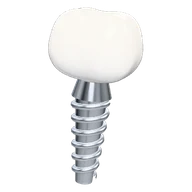
A dental implant is a small titanium post placed in the jaw bone, which acts like a tooth root. Once it has healed, a crown, bridge or denture is attached to it.
What implants can replace
- A single missing tooth, with an implant crown
- Several missing teeth, with an implant-supported bridge
- A full arch of teeth, with implant-supported dentures
Is an implant right for me?
Implants need healthy gums and enough bone to hold them. Smoking and some health conditions can affect healing. Your dentist will assess your mouth and health, and explain other options such as bridges and dentures.
The implant process
Treatment takes place over several months: assessment and planning, placing the implant, a healing period while it bonds to the bone, and then fitting the new tooth.
What to expect
Your visit, step by step
- 1
An assessment of your teeth, gums, bone and bite, with x-rays or scans
- 2
A discussion of options and a written treatment plan with costs
- 3
The implant is placed and left to heal
- 4
Your crown, bridge or denture is made and fitted
Your dentist explains your options and costs before any treatment starts. Questions? Call (03) 9562 0675
Technology we may use: a panoramic (OPG) x-ray. About our technology

Please note: Any surgical or invasive procedure carries risks. Before proceeding, you should seek a second opinion from an appropriately qualified health practitioner.
Helpful reading
Questions
Answers before you book.
Usually several months from start to finish, because the implant needs time to heal into the bone. Your dentist will give you a timeline for your treatment.
The area is numbed for the procedure. Some tenderness and swelling afterwards is common and usually settles within a few days.
Costs depend on how many teeth are replaced and what is needed. After an assessment we give you a written treatment plan with costs so you can check your rebate with your health fund.
Brush and floss around it like a natural tooth, and keep up regular check-ups and cleans.